The Blackout Sheet
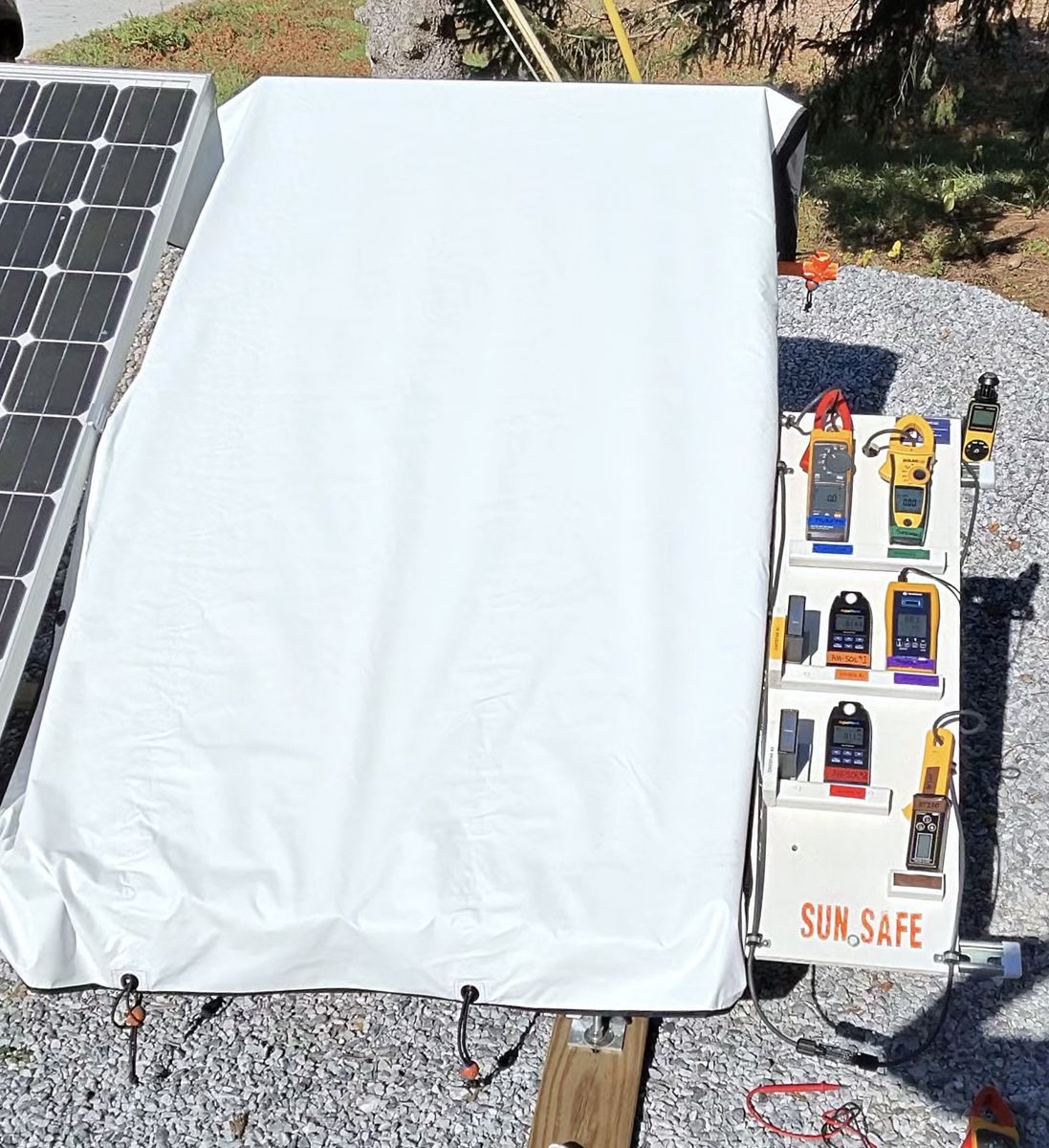
A multi-layer irradiance-suppression cover for PV source circuits. It stops the photocurrent at the source, so a module can be worked on while the sun is up.
PATENT PENDING · US 64/026,462Solar panels make electricity whenever light hits them, and there is no off switch for that.
Over the years the solar industry has found problems in the field and answered them one at a time with code changes, safety equipment and new standards.
One problem has stayed unsolved: the shorted string. It pushes current whenever the sun is out, and it can’t be safely disconnected under load. Crews either work it live in full PPE or wait for dark to fix it. And because a repair made at night can’t be tested until the sun is back, the circuit has to be revisited the next morning.
Covering the panels has long been an ad hoc field fix, but no cover on the market is designed for full-sun suppression. Off-the-shelf tarps were tested by UL in 2011 and found inconsistent and unreliable. The report concluded: “More research may be needed to find or develop specific foam products or other surface applied film technology that can be proven to be reliable and effective in blocking illumination to PV systems.”
Since then, U.S. solar has grown from about 4 GW to 279 GW, about 70 times larger. Worldwide it has grown from 67 GW to 1,865 GW, nearly 28 times. In that time no one has brought a reusable cover made for PV to market.
After running into this problem again and again through my career, I set out to build that cover, designed for the extremes: keep light from reaching the cells, collapse the photocurrent, and make a failed module far safer to disconnect than it was.
The science
- Photocurrent. Each cell is a current source. Photons absorbed in the cell free charge carriers, and the short-circuit current rises in direct proportion to irradiance (Isc ∝ G). The test module: 8.71 A at 1,000 W/m².
- Voltage is there in any light. Open-circuit voltage rises with the logarithm of irradiance, so it stays high even in dim light.
- Series cells, series modules. Cells and modules in a string carry the same current. Opening one device, or shutting down one section, does not stop the photocurrent in the rest; each lit cell keeps generating.
- Where shorts come from. See pv magazine USA, “Short circuits: How they happen and how to prevent them,” Aug 28, 2017.
- Why a short persists. A string’s short-circuit current is only about 10% above its operating current, so a short does not blow the string fuse. Breaking that current under load draws an arc.
- What rapid shutdown limits. It applies to PV on or in buildings (NEC 690.12), not to ground-mounted utility arrays. It limits conductor voltage: 30 V outside and 80 V inside the array boundary (NEC 2017–2023 690.12(B)). It does not remove the photocurrent inside the module.
- The only lever left is light. Cut the photons and the current falls with them. Optical density (OD) measures the cut in powers of ten: at OD 2.3, 1,000 W/m² becomes about 5 W/m², and the test module’s 8.71 A becomes about 44 mA.
Formulas, sources and limits: Method.
The problem
In the field
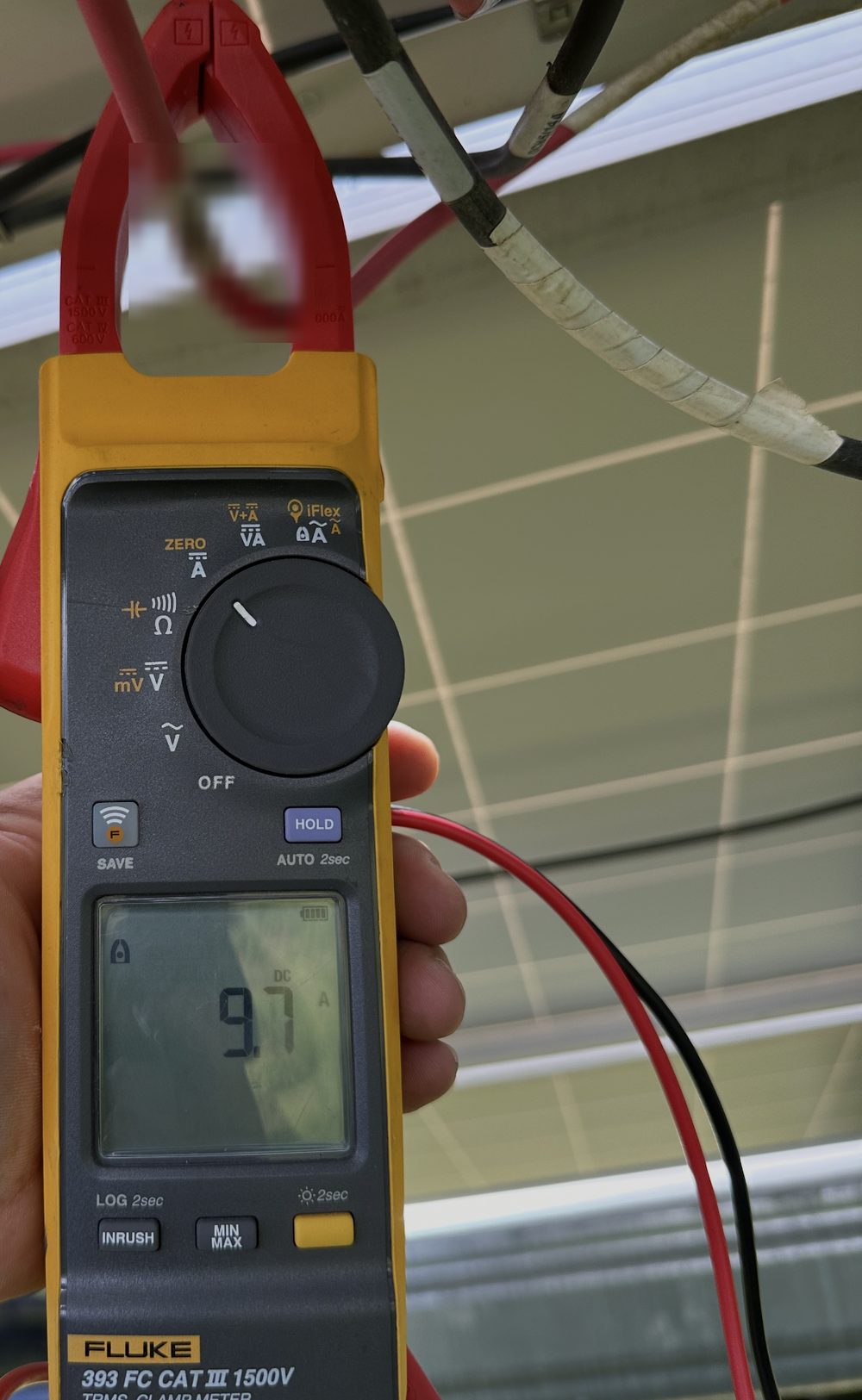
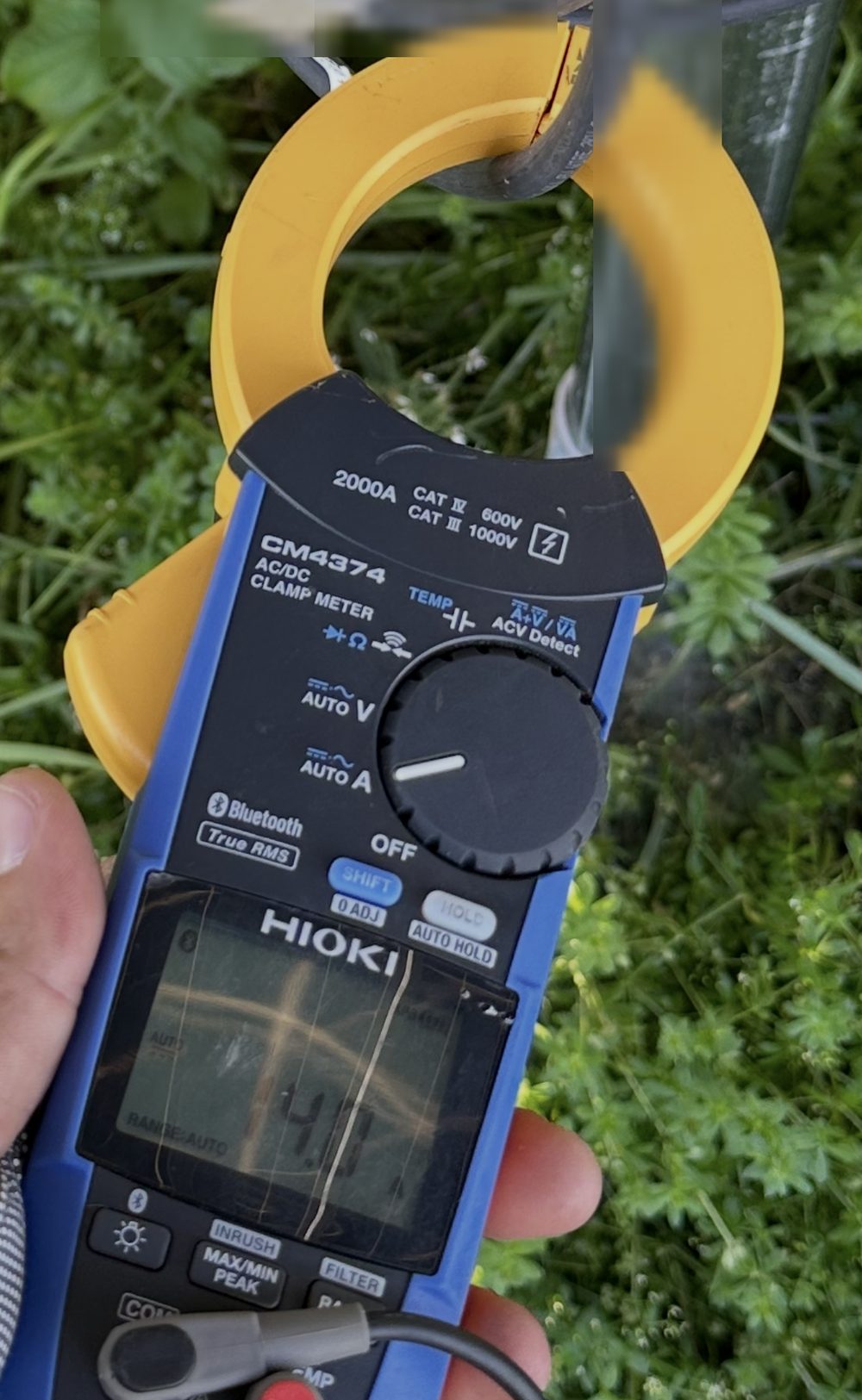
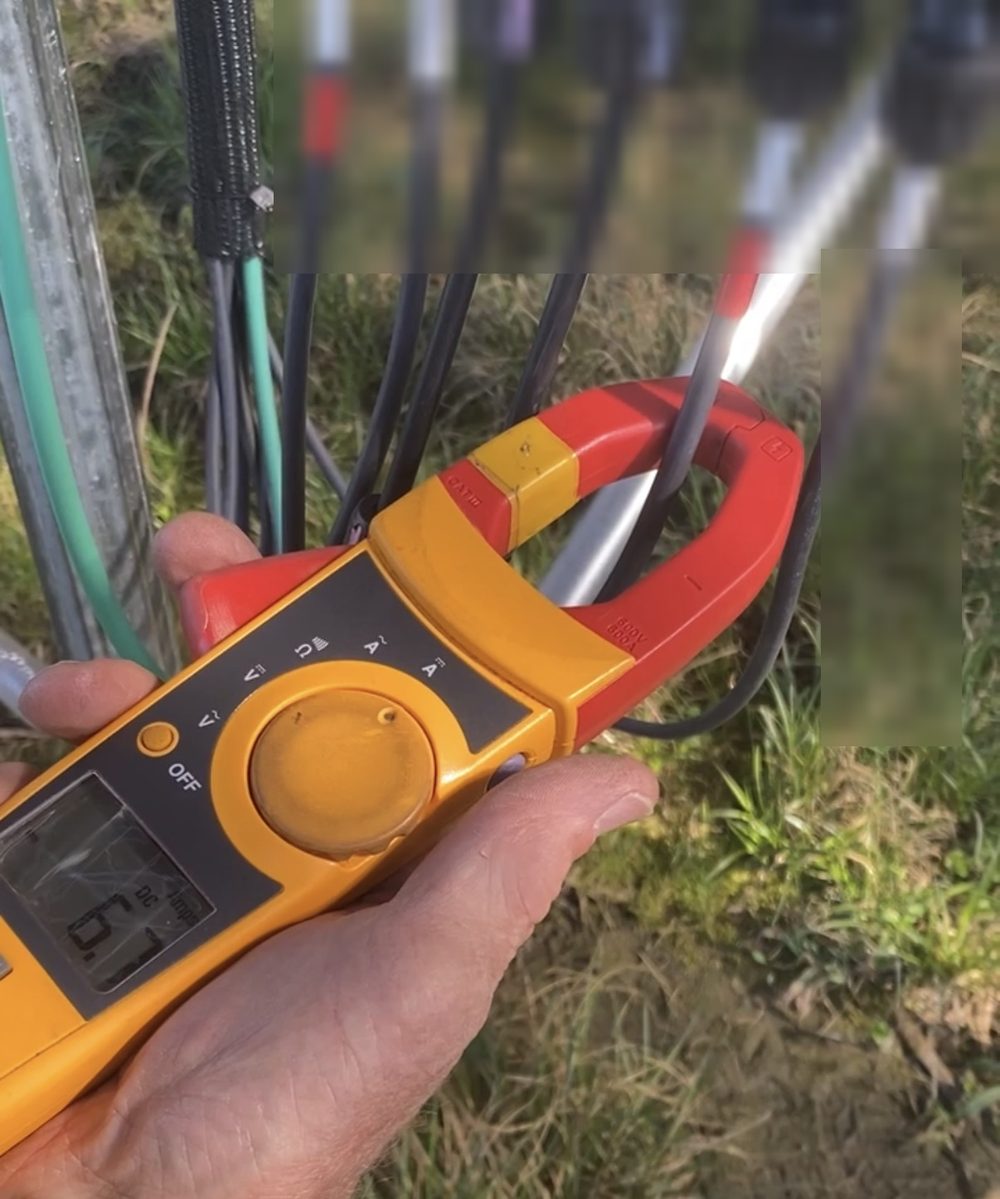
What the code and the fire service say
- Light means voltage; a disconnect doesn’t change that.
- Array conductors are “generally energized during daylight hours”; opening a disconnect “provides a false sense of security.” Brooks & Rogers, IAEI 2015
- “While exposed to the sun, PV systems remain energized, even after a building’s connection to the grid has been disabled.” IEA PVPS T12-09:2017, p. 8
- NEC 2023 690.13(B): required label: “WARNING — ELECTRIC SHOCK HAZARD — TERMINALS ON THE LINE AND LOAD SIDES MAY BE ENERGIZED IN THE OPEN POSITION.”
- The fire service documented the hazard.
- Grant, NFPA Research Foundation, 2010 (rev. 2013). Report (PDF)
- Backstrom & Dini, UL, 2011. Project · Report (PDF)
- Paiss & Brooks, Cal Fire guideline: “PV array and wiring is off limits to fire fighters.” Slides (PDF)
- Fraunhofer ISE / TÜV Rheinland, 2014. Project · Guideline (PDF)
- The code responded with rapid shutdown, which limits conductors, not modules.
- NEC 2014 690.12: conductors “more than 1.5 m (5 ft) in length inside a building, or more than 3 m (10 ft) from a PV array” limited “to not more than 30 volts and 240 volt-amperes” “within 10 seconds.” IAEI 2015
- NEC 2017–2023 690.12(B): 30 V outside / 80 V inside a 1 ft array boundary within 30 s, or a listed hazard control system (UL 3741).
- The residual hazard remains at the module.
- Damaged modules, failed rapid shutdown, pre-2014 systems with none.
- “The implicit requirement for ‘module-level shutdown’ that results from the 80 V limit has proven to be contentious.” IEA PVPS T12-09:2017, p. 26
- A shorted string keeps pushing current whenever the sun is up, shutdown or not, and is not safe to disconnect under load.
- Tarps are inconsistent: 2 of 4 left 1.8–2.1 A, >120 V. UL 2011 §9.1
- NFPA 70E 2027 first draft, Article 390: “Prior to any work on an energized PV array, a risk assessment shall be performed” (390.3); “No work shall be performed on exposed PV terminals greater than the electric shock or arc flash thresholds” (390.4(A)).
- Shock threshold (dc): 100 V and 40 mA (draft 390.2(2)).
- Arc flash threshold: 1.2 cal/cm² (5.0 J/cm²) incident energy, the onset of a second-degree burn; the arc flash boundary is set where exposure reaches this level (NFPA 70E). Fluke
- Thresholds as written in the draft; confirm section numbers against the issued 2027 edition. Draft: First Revision statements (PDF) · First Draft ballot (PDF)
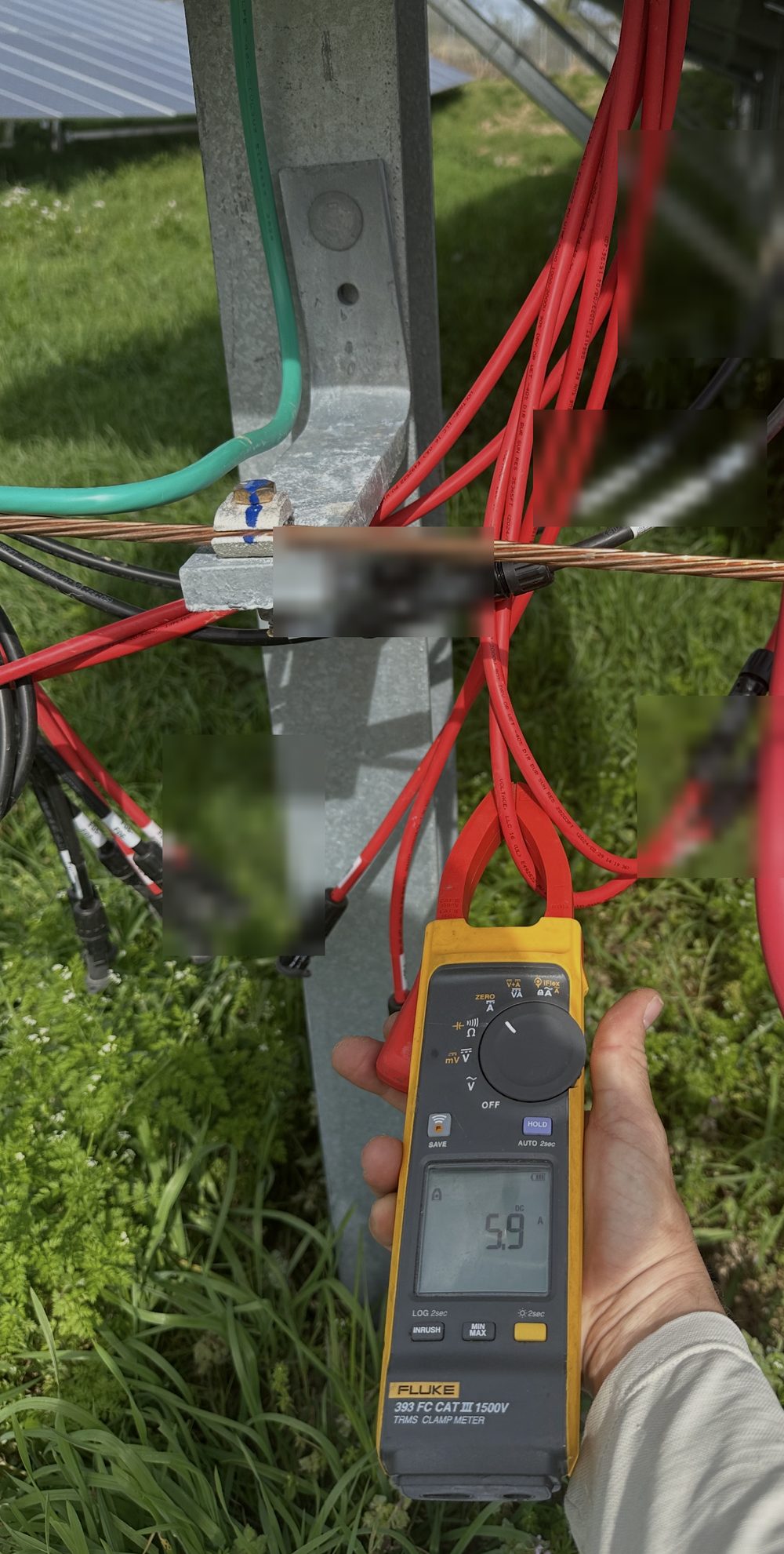
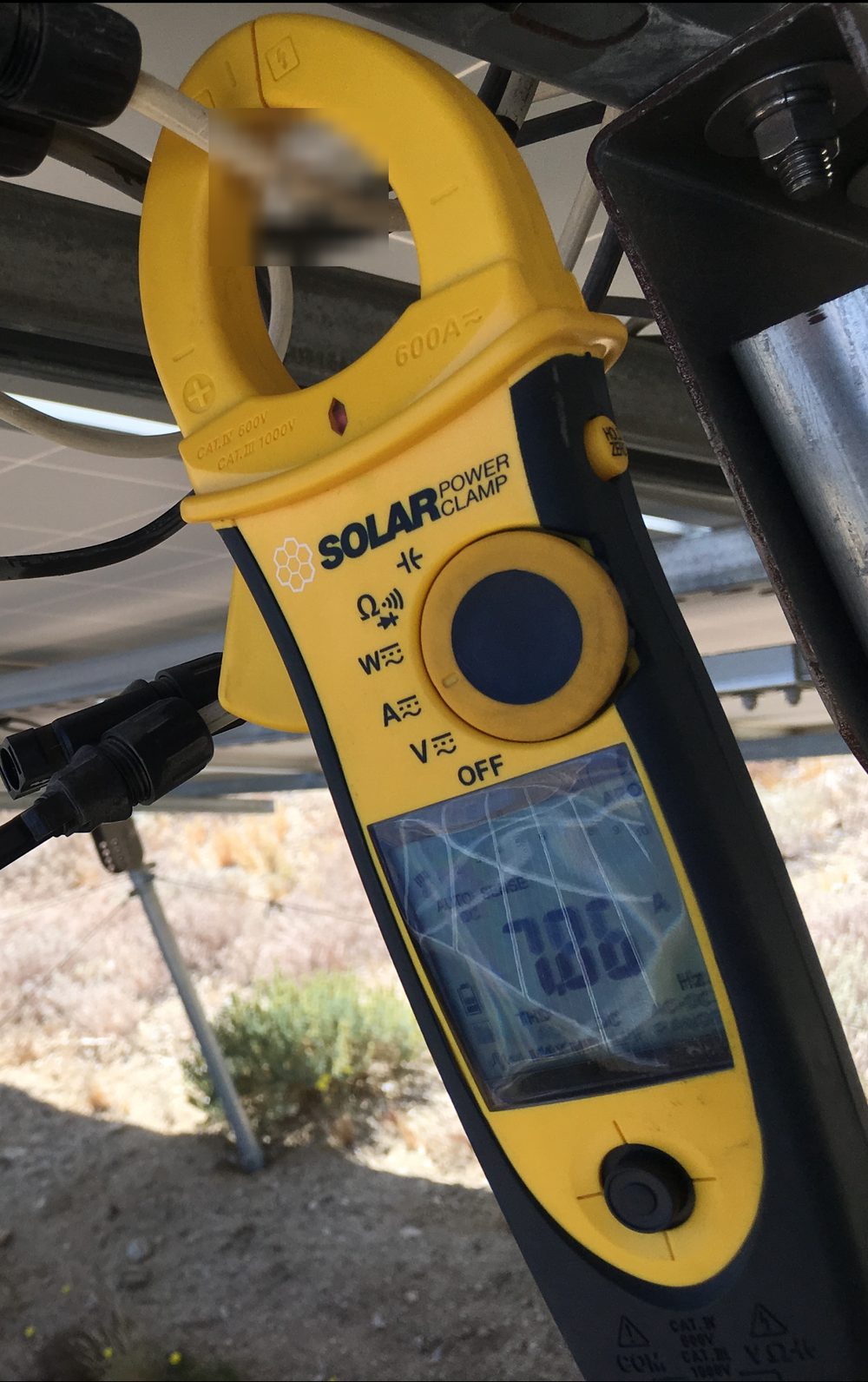
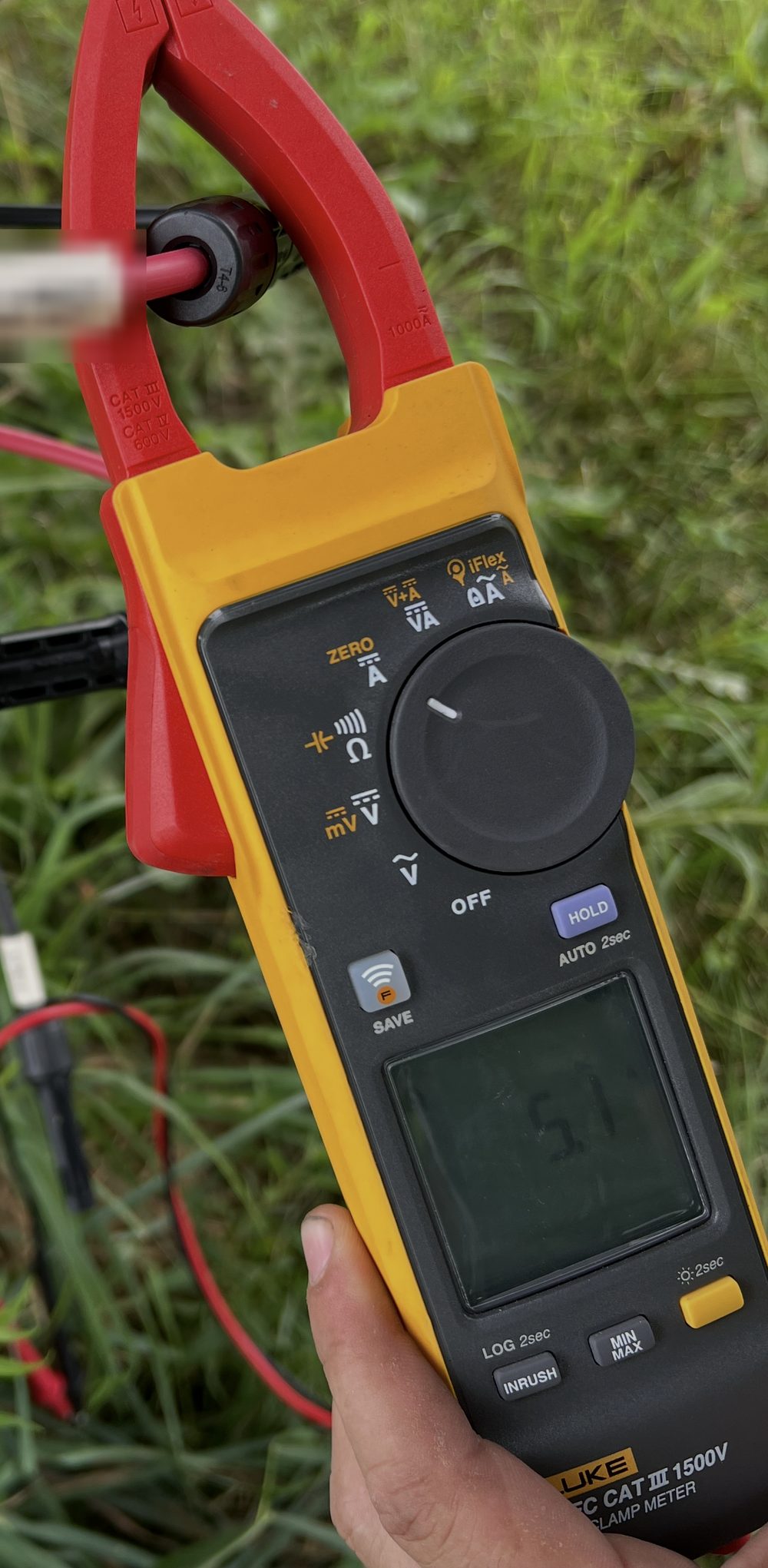
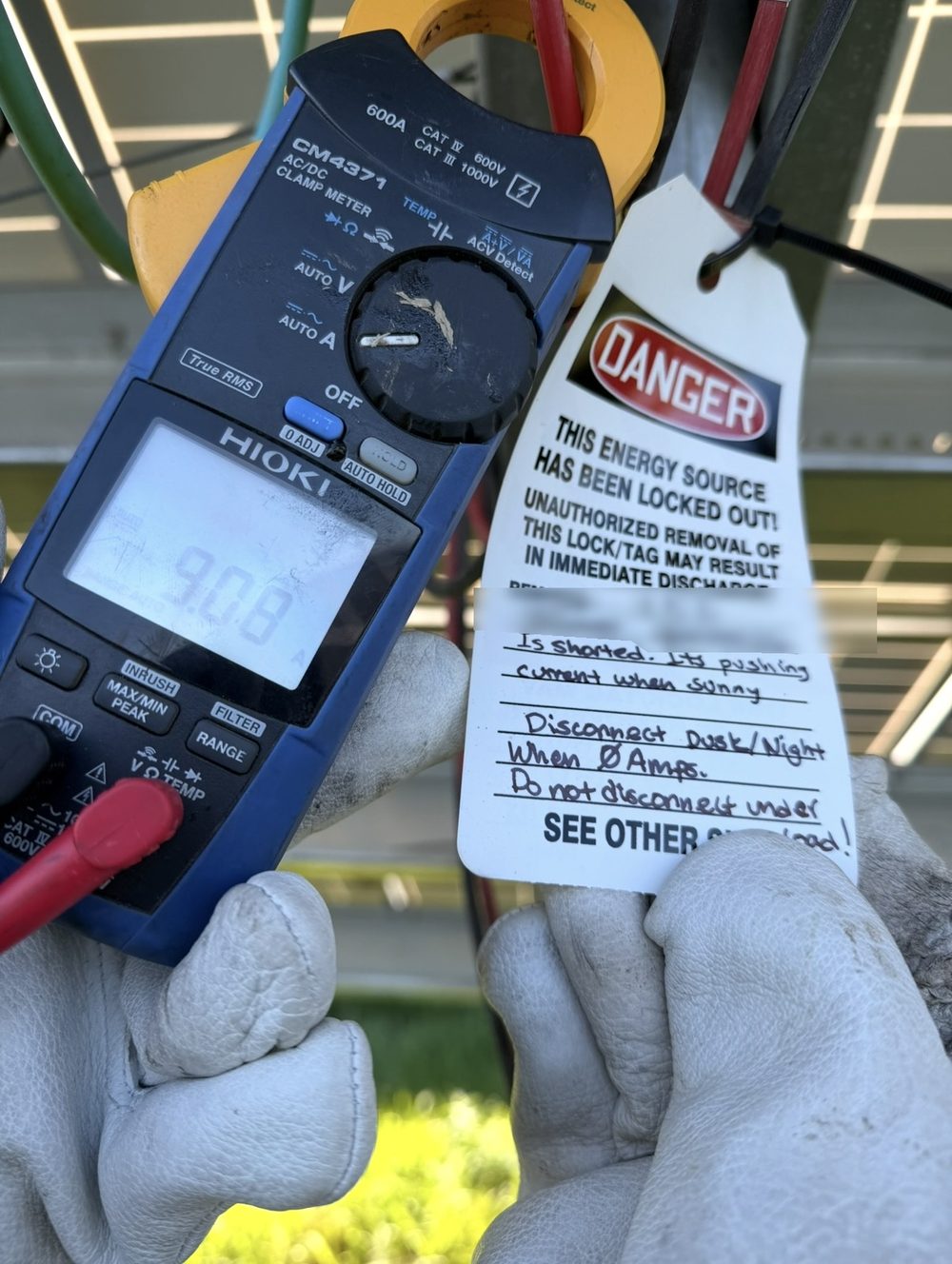
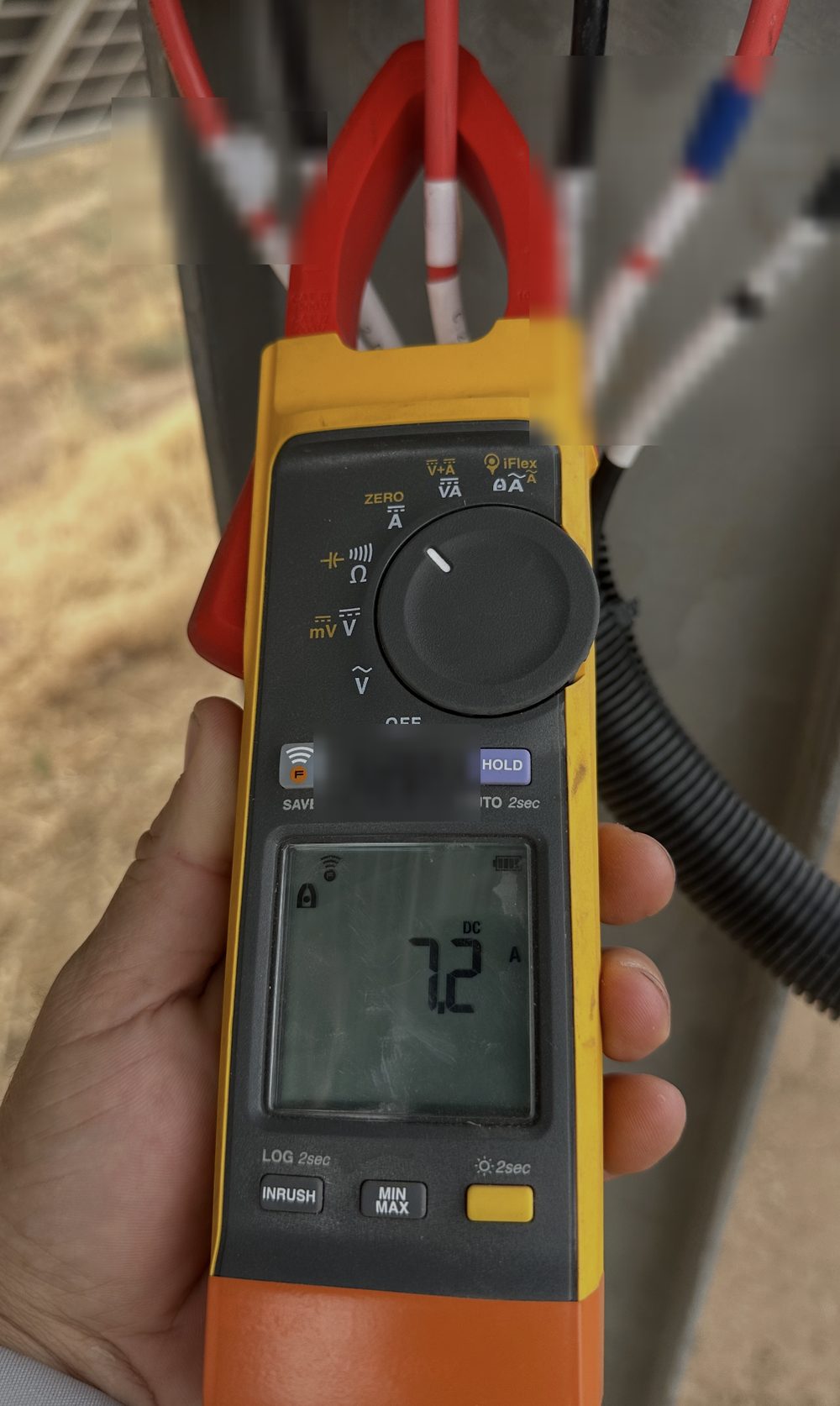
Not an isolated case
- A shorted string won’t blow its own fuse. A string’s short-circuit current is only about 10% above its operating current; string fuses are there to protect the modules from back-feed, not to clear a short. McNutt, Sekulic & Dreifuerst, Solar Photovoltaic DC Systems: Basics and Safety, NREL, 2018, p. 1. PDF
- The disconnect didn’t stop it. In a residential fire caused by a miswired string, opening the inverter’s dc disconnect “did not stop the current flow from the array”; the fire went out only after the panels were disconnected. Jackson, “Residential PV System Fire,” IAEI Magazine, May 2016. Article
- The DC switch won’t clear it. A reversed string in the same MPPT is a direct short that can damage modules and “may cause equipment damage, energy generation reduction or even fire.” “The PV string cannot be turned off by switching off the DC switch”; it is fixed after dark. Solis, “Ensuring DC Polarity is Correctly Connected,” Solis Seminar ep. 46, Jul 19, 2022. Article
- A utility works at night. To replace two burnt string fuse holders on a 900 V array, a utility crew waited for dark: “Solar panels can’t be turned off when the sun is shining on them.” Blanchard, “The Solar Farm Under the Moon,” Kauaʻi Island Utility Cooperative, Mar 21, 2024. Article
- How short circuits happen. pv magazine USA, “Short circuits: How they happen and how to prevent them,” Aug 28, 2017. Article
What’s been tried
- Tarps: UL 2011 §9.1, Table 17 (PDF p. 58): four tarps on a live array at 1,000–1,100 W/m². Black 4-mil plastic and green salvage canvas read 0 A; blue poly and red salvage vinyl left 2.1 A / 126 V and 1.8 A / 124 V.
- “The effectiveness of a tarp in blocking illumination to a safe level does not appear to be related to the quality or cost of the tarp.” Class A foam “did not prove to be effective or reliable.”
- “More research may be needed to find or develop specific foam products or other surface applied film technology that can be proven to be reliable and effective in blocking illumination to PV systems.” (UL 2011, §9.2)
- PVStop, spray-on coating: PVStop (PVStop International, Australia) is a liquid sprayed onto the panel to block light and stop its DC output, used by fire services including FDNY and the London Fire Brigade. Patented as US 9,455,370 B2 (Williams, Solar Developments Pty Ltd, 2016, ref. [16]): opacified peelable coating, output below “about 200 milliamps DC.” It works for a fire scene. For maintenance it’s single use: each application is consumed, and the coating has to come off before the array goes back in service. The Blackout Sheet is a reusable cover that comes off by hand when the work is done, leaving the array ready to run.
- Electronic module shutdown: US 9,791,835 B2 (McCune, Rice & Wilson, 2017, ref. [17]): junction-box relays switch off each module’s output on a shutdown request, with a lockout to re-energize. The cells stay lit; safety depends on the electronics working, the same limit as rapid shutdown.
What I set out to do
- Suppress the photons, not the circuit: block light to a measured optical density.
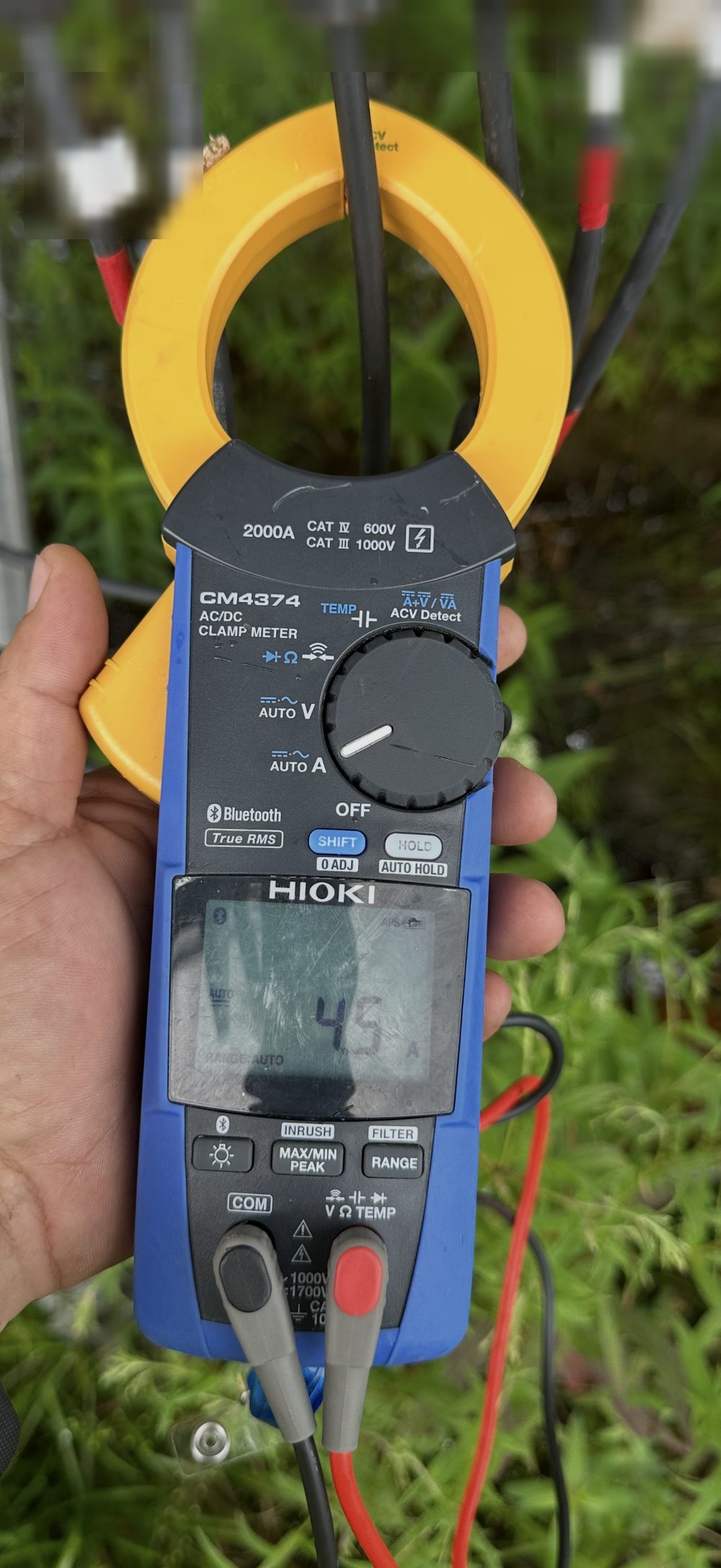
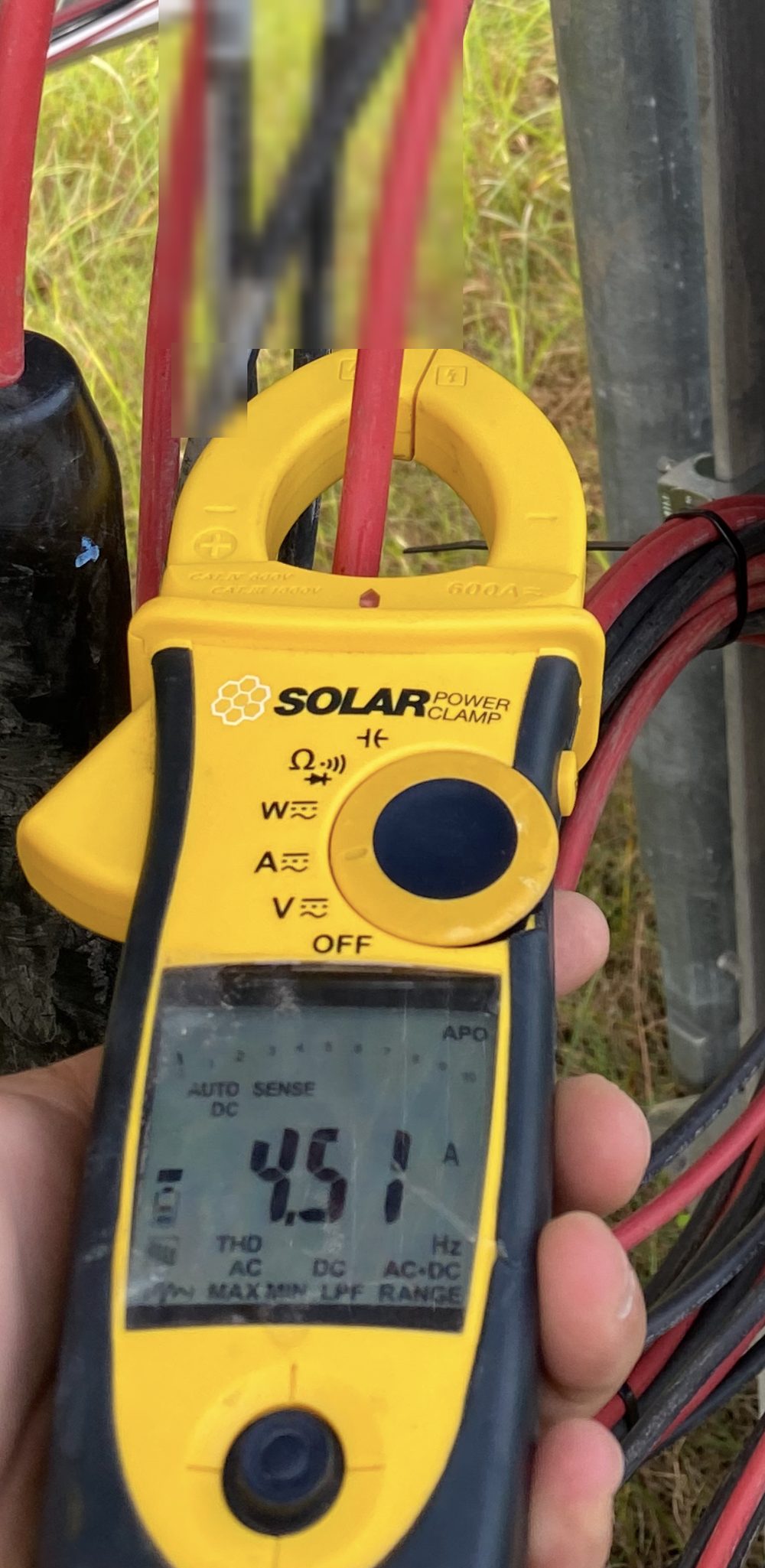
- Pass gates: current < 125 mA on three clamps, under-sheet light < 7 W/m², OD ≥ 2.3 (target 2.5).
- Every trial cross-checked by two optical and three electrical instruments.
- Voltage: open-circuit voltage is read before the short and again with the sheet on. Recorded on every trial; not a pass gate.
- 40 mA line: BT270 current is also checked against 40 mA, the dc shock threshold in the NFPA 70E 2027 draft (100 V and 40 mA, [7]); UL 2011’s “Lock On” shock band starts just above it [1]. Recorded every trial, not a pass gate.
- Full references · Limitations
Thinking ahead
Plug-in solar: safety first, while it’s still new
Plug-in kits put solar panels straight into homeowners’ hands, on balconies, porches and in yards, with no installer and, so far, no code of their own. The National Electrical Code doesn’t yet define plug-in solar (pv magazine USA, Oct 28, 2026). That makes now the time to set the safety habits, before the market sets them by accident.
- The AC side is covered; the DC side isn’t. Listed kits handle the plug: the inverter shuts off its output when it loses the grid (UL 1741), and plug-in kits are now certified to UL 3700. Neither turns off the panel: it and its DC cable stay live whenever light hits them.
- One panel is small, but not nothing. The test module makes 38 V and 8.71 A in full sun: under the 100 V shock threshold in the NFPA 70E draft, but far above its 40 mA, and panel connectors are not made to be pulled apart under load.
- Two in series doubles the voltage. Some kits wire two panels together.
- A rule anyone can follow today: cover the panel or wait until dark before unplugging its connectors, moving it or working on it. What a cover does to that current is on the Results page.
- Where it’s allowed: state-by-state rules on Plug-in laws.